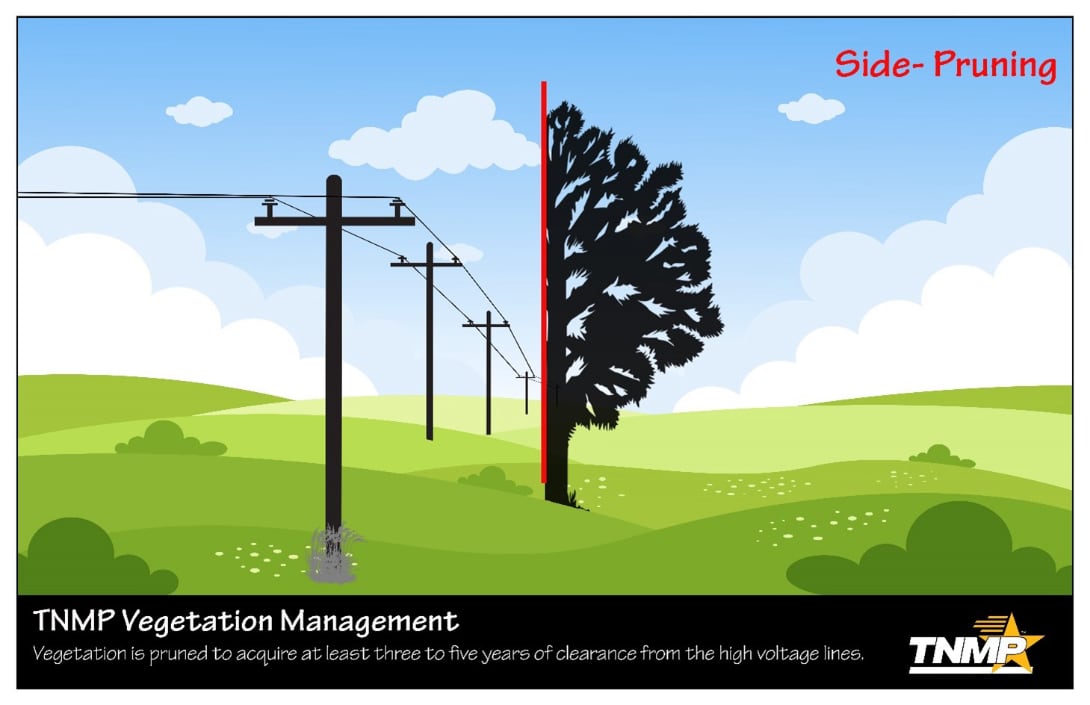
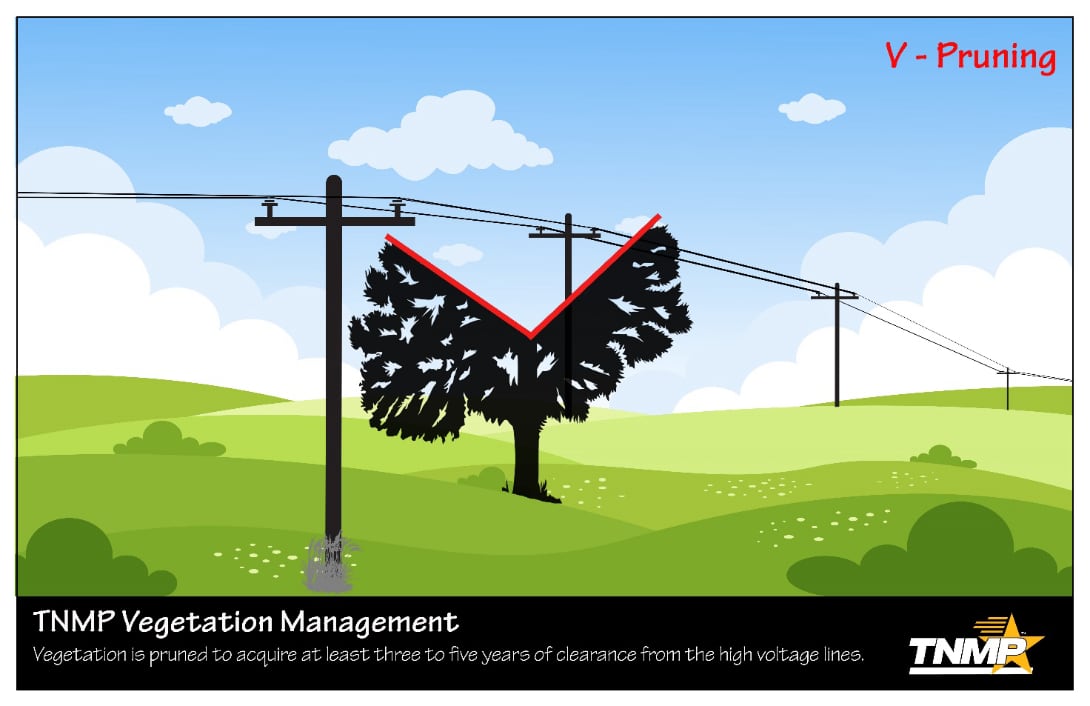
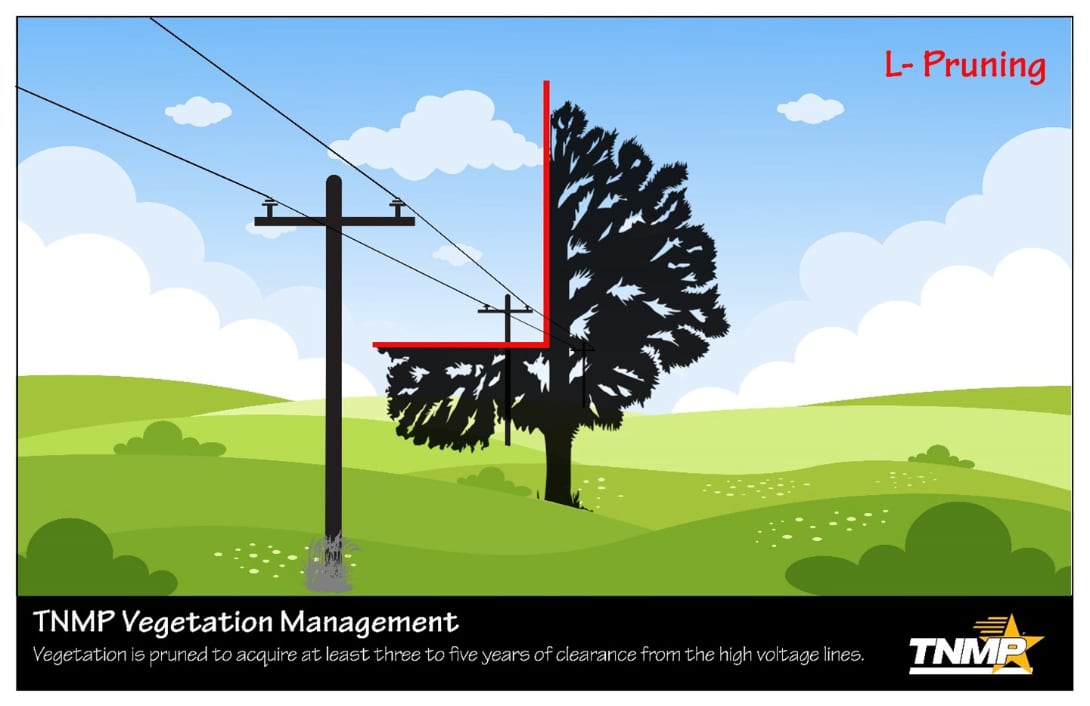
TNMP’s Vegetation Management Guidelines align with the standards developed by the American National Standards Institute (ANSI) as amended and International Society of Arboriculture (ISA) Best Management Practices (BMPs). Whenever possible and practical, TNMP’s contractors adhere to procedures and examples set forth by ANSI A-300:
- Part 1 – standards for pruning operations intended as a guide for federal, state, municipal, and private authorities including property owners, property managers, and utilities
- Part 7 – IVM for utility rights of way and sustainable vegetation management practices
- Part 9 – standard practices for evaluating the structural integrity and risk of failure in trees, shrubs, and woody plants
This approach follows industry standards and regulatory requirements, prioritizing reliability and public safety while still observing proper arboricultural practices. Utilization of these principles/standards will:
- Promote natural directional pruning, helping direct future growth away from the lines
- Minimize the need for future pruning
- Reduce the likelihood of disease and decay
- Control incompatible plant species
- Encourage biodiversity
- Create a more stable right of way environment
- Mitigate risk and associated threats to the utility infrastructure
Appearance of trees after natural directional pruning techniques: